
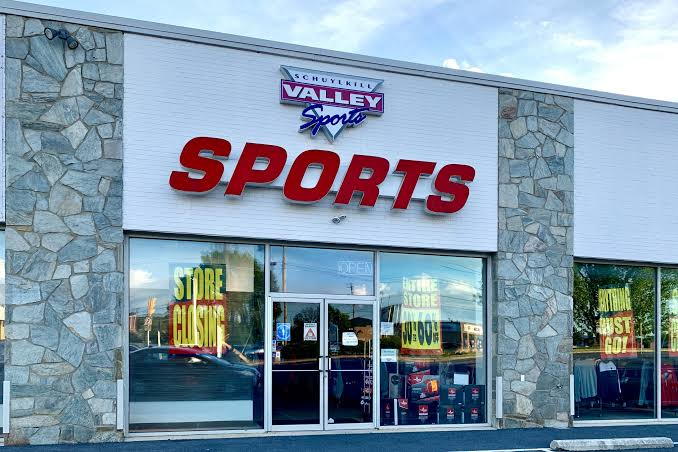

If you’ve ever bought team apparel, equipment, or a great pair of running shoes from Schuylkill Valley Sports, you’ve probably heard rumors about stores closing. Many people are asking—is Schuylkill Valley Sports going out of business? The short answer: No, the company is not shutting down entirely. But it’s important to understand the bigger picture behind these recent changes. Let’s break down what’s really happening, why it matters, and what you should do as a savvy business owner or sports shopper.
Introduction to Schuylkill Valley Sports
Schuylkill Valley Sports has been part of the Pennsylvania retail scene since 1971. For decades, they’ve been known for a hands-on, local approach—fitting cleats, sizing uniforms, and helping families find gear for the next sports season. The company grew its network of stores across eastern Pennsylvania, from its first location in Berks County to almost a dozen by the late 2010s.
But like many traditional retailers, Schuylkill Valley Sports has faced serious pressure in recent years. The retail world has changed fast. Online shopping, big-box competitors, and the global pandemic made physical retail especially tough. When COVID struck in early 2020, companies across the country had to rethink their entire playbook. For Schuylkill Valley Sports, this led to difficult decisions—but those decisions weren’t the end of the road.
Closure of Physical Locations
In 2020, Schuylkill Valley Sports announced it would close 9 of its 10 remaining stores. For many, this sounded like the end. But as the company made clear, “This is NOT a good-bye. We are NOT going out of business.” That meant closing most retail doors but keeping the core of the business alive.
Store closures happened across Berks, Lehigh, and Montgomery counties. Quakertown, a long-time location, was among the last to close in late 2022. If you drive by some former Schuylkill Valley Sports stores now, you’ll see “permanently closed” signs. It’s natural to assume the company is gone—but that’s not the whole story.
Why did the company make such a big move? Let’s be practical. Traffic and sales had dropped sharply starting in 2020. Online competitors offered deep discounts and quicker home delivery. Rents and operational costs for brick-and-mortar stores were not going down. By closing most stores, Schuylkill Valley Sports could stabilize its finances and protect what mattered most—its core business and loyal team customers.
Don’t forget: Every location means hiring, training, utilities, and inventory management. In tough retail markets, that adds up fast. This pivot helped SV Sports focus on what was working and cut what wasn’t.
Impact on the Community and Customer Base
When a neighborhood sports store closes, it’s more than just an empty storefront. Schuylkill Valley Sports was a fixture for many parents, coaches, and young athletes. People lost their go-to spot for sneakers and uniforms. Local teams suddenly needed new solutions for volume apparel and equipment orders.
But you can’t afford to get stuck in nostalgia. Adaptability matters. The company worked to support communities during the transition—keeping team reps on call, shifting customers toward online services, and sharing updates about the future.
Consider what you’d do if your own customers needed to change the way they buy from you. Keep the lines of communication open. Offer alternatives, like direct shipping or team ordering online, to soften the impact.
Continuation of Team Sales and Online Operations
Here’s where the news stays positive. Even after closing most retail stores, Schuylkill Valley Sports doubled down on its strongest business unit: team sales. Team sales means outfitting entire sports teams or leagues—supplying uniforms, custom gear, trophies, and accessories in bulk. For schools, community leagues, and club organizations, this model still works.
You can think about team sales as business-to-business (B2B). Instead of winning one shopper at a time, Schuylkill Valley Sports serves coaches, athletic directors, and managers who buy for 10, 20, or even 100 players. This model moves predictable volume and deepens long-term relationships. If you’re shifting your own business model, ask: Where is demand steady, and where can you scale relationships? Team sales is a great example of a proven B2B move.
The company also put more energy into its online sales. The e-commerce site wasn’t just a temporary patch—it became a core asset. You can browse, order, and even customize gear 24/7. In fact, digital-first strategies are keeping many traditional businesses afloat during market changes. If you still rely only on foot traffic, now’s the time to rethink.
Here’s how a transition to online boosts your survival odds:
– Lower fixed costs: No rent, less overhead.
– Reach beyond local ZIP codes.
– Easier to update inventory in real time.
– Customer convenience and self-service options.
Consider launching a loyalty program and track repeat purchase rate to see if it moves. That way, you turn digital growth into lasting customer value.
Company’s Rebranding and Future Plans
One question that comes up: Why did Schuylkill Valley Sports rebrand as “SV Sports”? Rebranding can be a smart play when you want a fresh image or need to bring your business into a new era. SV Sports signals a leaner, more modern operation.
During 2021–2022, the company announced a restructuring, not a liquidation. Restructuring means making tough choices to get healthier financially—cutting costs, reshaping product lines, and building new capabilities. For example, SV Sports said it planned to return with a new retail concept, focused on the future instead of the past.
If you’re a business owner facing market uncertainty, take a page from this playbook:
– Slim down to your most profitable operations.
– Reinvent your brand so it feels current.
– Use restructuring to pivot instead of shutting down.
– Test new retail or service concepts before going big.
This is a textbook case for adapting, not giving up. You can keep your core alive, even as you sunset legacy operations.
Current Status and Remaining Open Locations
So, where can you go to shop SV Sports in person now? Most local retail locations are closed or rebranded. However, the company stated it would keep at least one physical location open. As of 2024, individual store listings sometimes change—so check the latest on their website or call ahead.
SV Sports continues to operate its online store and team sales division actively. The transition means fewer walk-in spots, but much stronger digital capability and B2B service. If you’re a team manager, coach, or organizational buyer, you can still place custom orders and work with your local rep.
For individuals and families, the new online ordering process means you’ll order from home instead of making a special trip. While in-store shoe fittings may be harder to find, SV Sports is betting that digital service and team relationships keep the brand relevant.
Looking at the future, SV Sports still plans to bring back retail with a new model. That may mean smaller stores, pop-up shops, or experiential showrooms. If your business is struggling with storefront costs, research hybrid and online-offline concepts. For inspiration on how to mix digital and physical retail, check out resources like StartBusinessLine.com for case studies.
How SV Sports Plans to Serve Its Customers Going Forward
When retail directions change, service becomes even more important. Here’s what you can learn from SV Sports’ strategy—and apply to your own business:
1. Keep customer data up-to-date. Use email or SMS to share news on hours, services, or reopening plans.
2. Offer clear returns and exchanges for online orders—remove the friction.
3. Assign dedicated reps for team or group orders, so big buyers never feel lost.
4. Gather feedback. Use customer surveys to find pain points and optimize the digital experience.
5. Test new service offerings, like local pickup lockers or pop-up events, to stay connected even without a physical store.
Remember, when you shrink your physical footprint, every remaining touchpoint counts. Invest in customer training and empower your staff to resolve issues fast.
Conclusion: Schuylkill Valley Sports’ Business Adaptation and Future Outlook
Is Schuylkill Valley Sports going out of business? No. The company is not completely shutting down—even as most familiar stores have closed. Instead, this is a classic business adaptation story. SV Sports focused on resilient units (team sales, online) and rebranded to signal a fresh start. Though you may miss the old store in your town, you can still access the products and reps you trust.
Don’t ignore the lessons here. When external forces threaten your survival, it’s not always about holding on the longest. Sometimes you need to let go of old ways to protect what matters most. Trim underperforming divisions, embrace digital transformation, and involve your community in the new chapter.
Looking ahead, SV Sports may bring back some local stores—possibly with a “new retail concept” that fits today’s habits and technology. Stay tuned, and don’t hesitate to try new tools and touchpoints to keep your business relevant.
Whether you run a sports store, a local service, or an e-commerce brand, remember: Change is hard, but adaptation turns adversity into opportunity. Study what works, listen to your customers, and chart a course for sustainable growth—just like SV Sports did.
Also Read This: